
The Art of Canapés: Elegant Bites for Miami's Most Memorable Events
A good canapé does a lot in one bite. It has to taste balanced, look intentional, and hold up in someone's hand while they're mid-conversation, all in about two seconds before it's gone. That's a harder job than most people give it credit for, and it's exactly why the best canapés stick in people's memory long after the tray has been cleared.
If you're planning a wedding, a corporate event, or a private gathering in Miami, canapés are one of the easiest ways to make an event feel elevated without making it feel stiff. Here's how to think about them.
Why Canapés Are Having a Moment
Passed bites aren't just a cocktail-hour formality anymore. Even wedding desserts are following the trend: couples are increasingly serving passed, miniature versions of traditional desserts instead of a single plated course, which says a lot about where hosting is headed in general. Guests want to keep moving, keep talking, and keep tasting, not sit still through a long, formal sequence of courses.
There's a practical reason canapés work so well for Miami events specifically. Between waterfront terraces, garden courtyards, and rooftop venues, a lot of the city's best event spaces are built for guests to circulate, not sit. Canapés match that rhythm. They let people explore a space and a menu at the same time.
What Actually Makes a Canapé Memorable
Anyone can put food on a small plate. A genuinely good canapé is a little more deliberate than that.
One bite, one idea
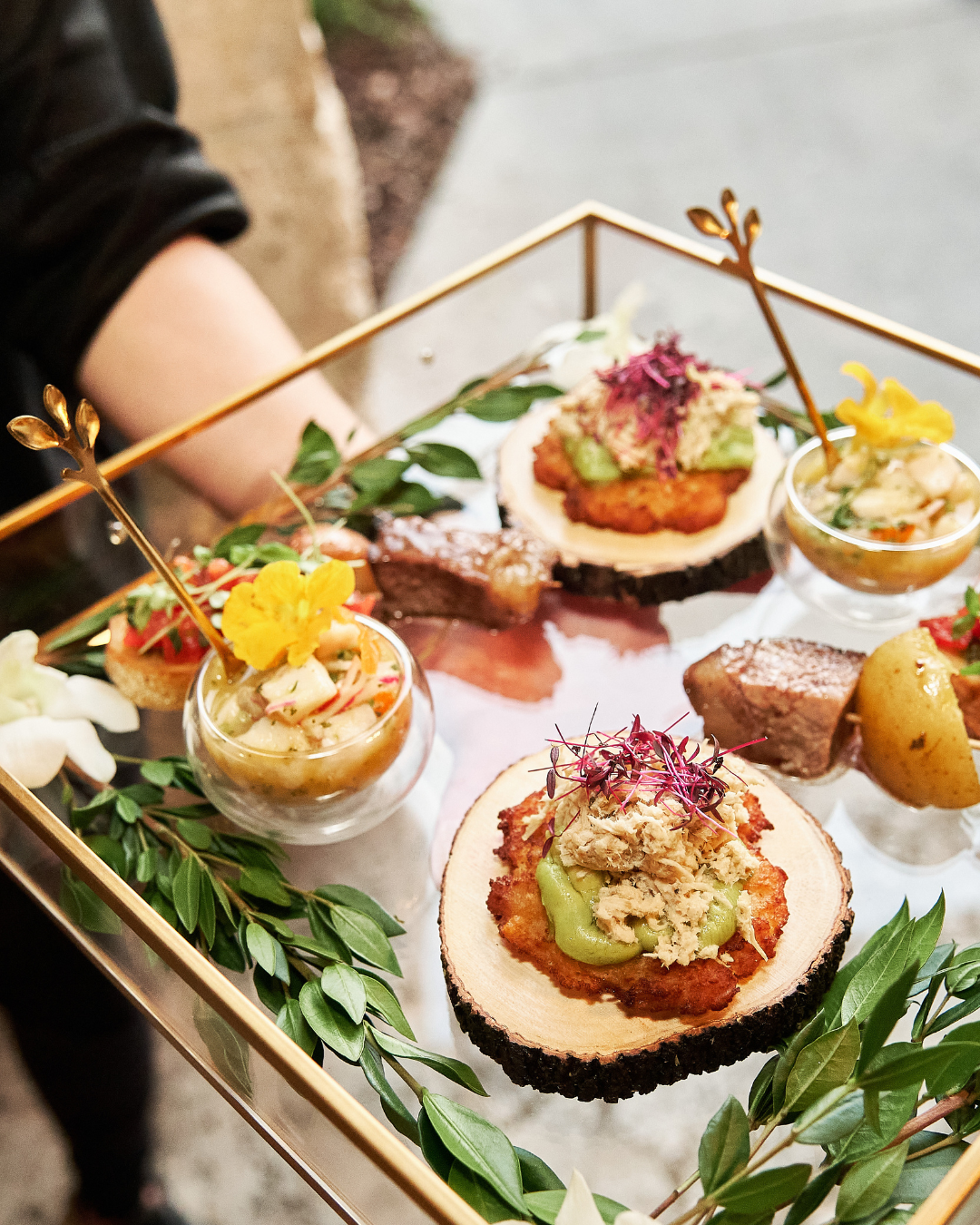
The best canapés commit to a single, clear flavor idea instead of trying to fit five ingredients onto one cracker. A seared scallop with citrus and a touch of chili. A short rib bite with pickled onion. Simple, but composed with intention. The goal isn't complexity, it's clarity.
Balance temperature and texture
A strong canapé menu mixes things up: something crisp next to something creamy, a hot bite next to a cold one, a rich flavor followed by something bright and acidic. Without that variety, even beautifully made canapés start to blur together after the fifth or sixth pass.
Presentation matters as much as flavor
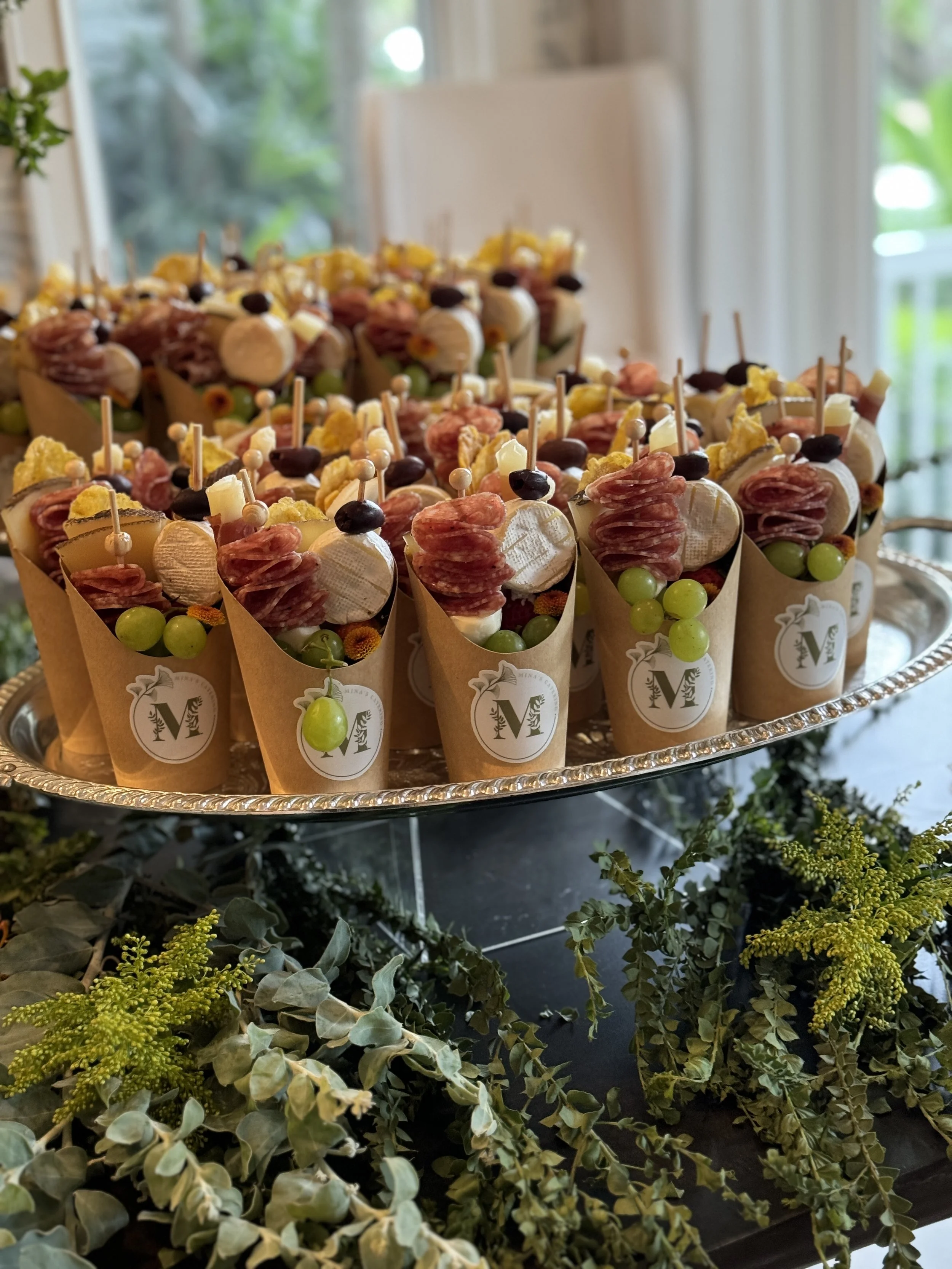
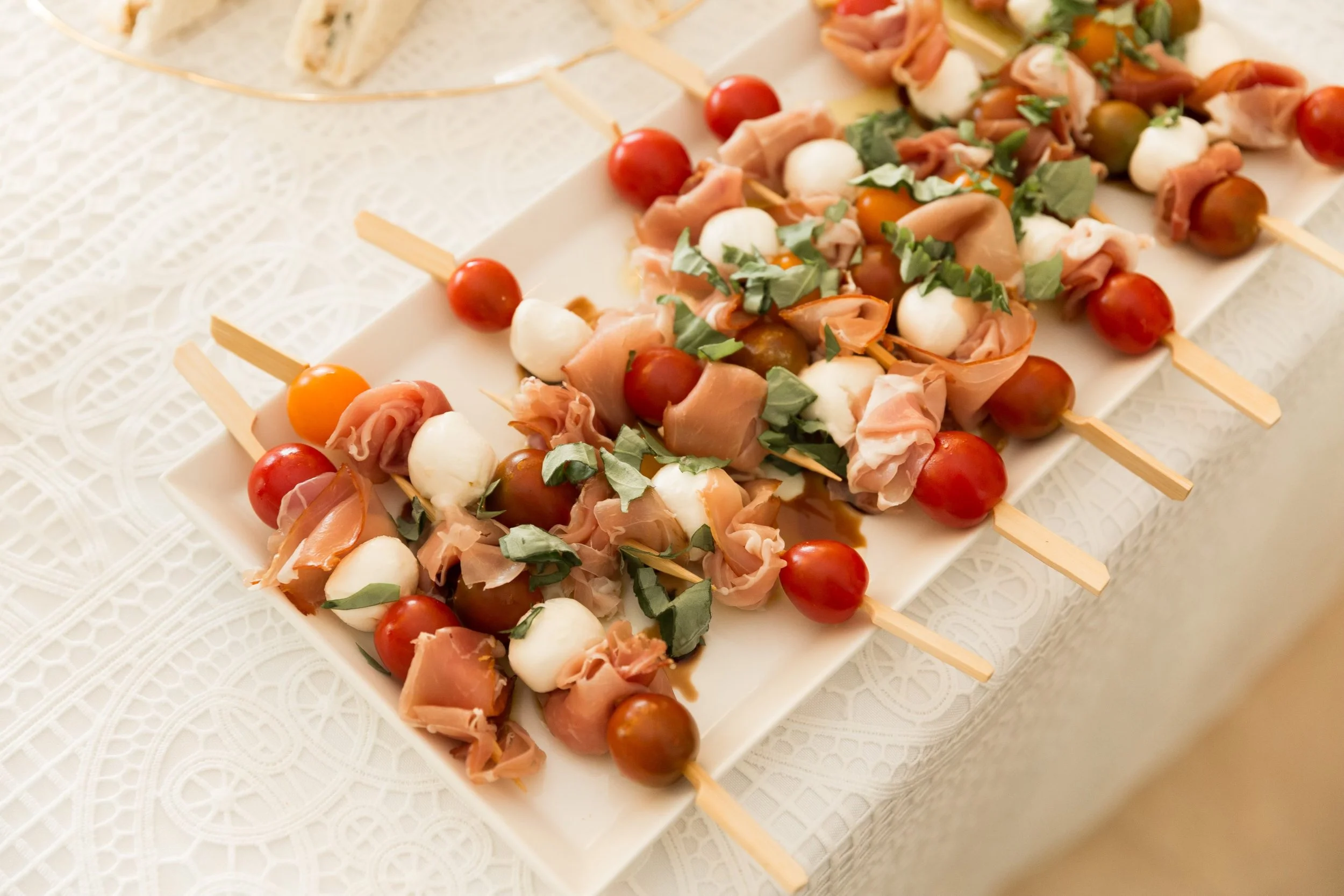
Because a canapé is often the first thing a guest tastes at an event, it sets expectations for everything that follows. A seasonal charcuterie board or a tray of canapés arranged with real care signals, before a single word is spoken, that the rest of the evening has been thought through just as carefully.
Planning Quantities and Staffing
This is where a lot of hosts underestimate what canapé service actually requires. As a general guideline, event planners suggest roughly 10 to 12 individual bites per guest when canapés are the primary food format for a cocktail-style event, and about one server per 25 to 30 guests to keep trays circulating without long gaps between passes. Too few servers, and the room feels like it's waiting on food. Too many identical trays passed too quickly, and the menu starts to feel repetitive instead of curated.
A good rule of thumb: build in a slower first pass to welcome guests, then pick up the pace once the room settles in.
Seasonal, Miami-Inspired Canapé Ideas
Miami's ingredient calendar gives canapés a lot to work with. A few directions that tend to work well here:
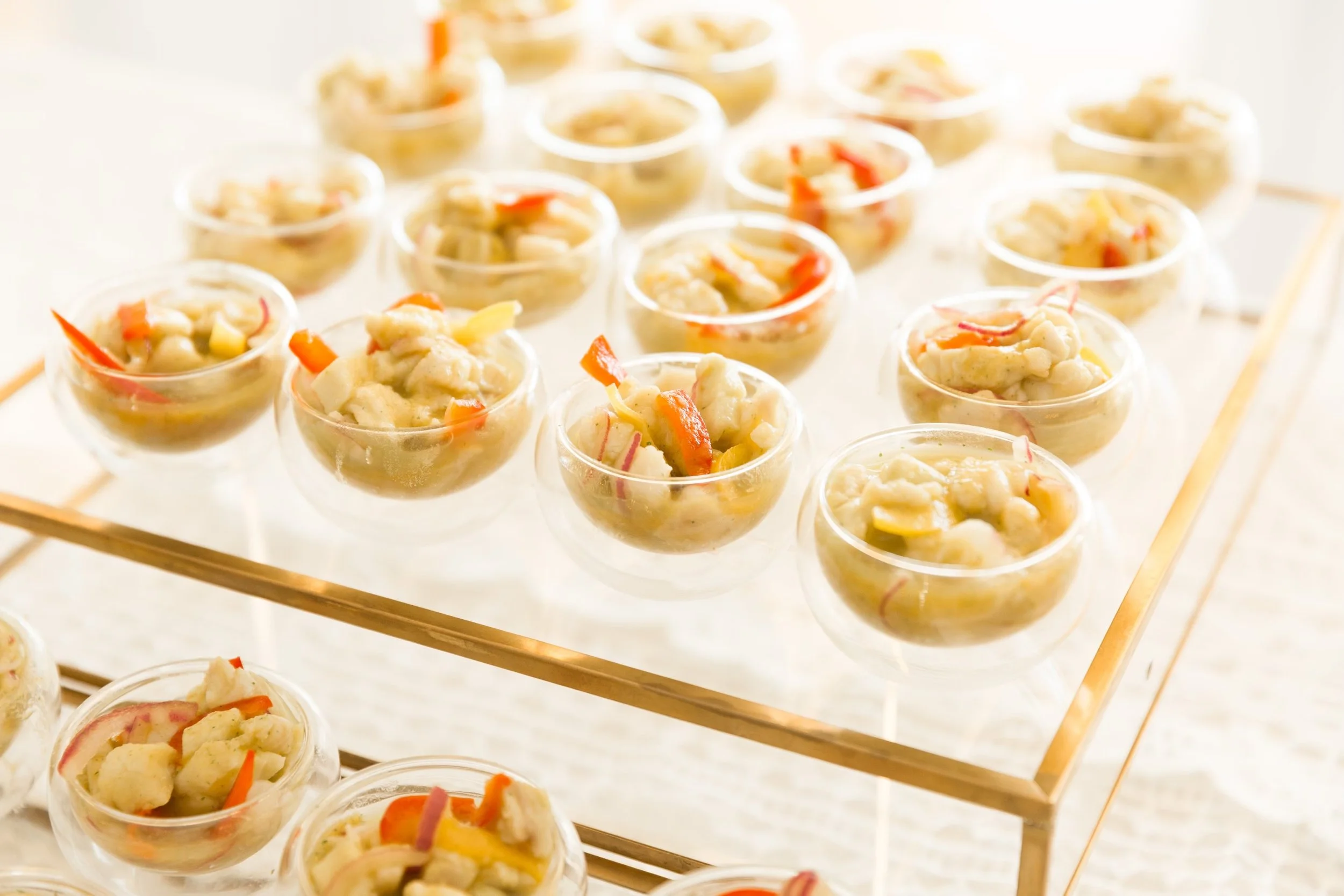
Bright, citrus-forward bites for warmer months, think ceviche spoons or citrus-cured fish
Tropical fruit pairings with cured meats or soft cheeses on a charcuterie-style board
Latin-influenced flavors, given Miami's culinary identity, worked into a familiar bite-sized format
Cooler-weather, richer bites during the winter high season, like short rib or wild mushroom
The best canapé menus don't force a theme. They lean into what's actually fresh and let the season do some of the work.
Where Canapés Fit Best
Canapés work across nearly every kind of event Mina's caters, though they show up a little differently depending on the occasion. At a wedding, they're often the centerpiece of cocktail hour, buying time for photos while guests mingle. At a corporate event, a tight, well-composed canapé menu can double as a subtle brand touchpoint, especially at a product launch or client dinner where every detail is being noticed. And for hosts who want something elevated without the formality of a seated dinner, a canapé-and-bar setup is often the easiest way to host a genuinely memorable private gathering.
Working With a Caterer on Your Canapé Menu
A few questions worth asking before you finalize a menu:
How many pieces per guest do you recommend for our event length and format?
How do you balance temperature, texture, and flavor across the full menu?
Can the menu reflect a season, a theme, or a specific cuisine we love?
How do you handle dietary restrictions within a passed menu?
How many staff will be circulating trays during service?
The Small Bite That Sets the Tone
Canapés might be the smallest item on a catering menu, but they carry an outsized amount of the evening's first impression. Done well, they're not filler before the "real" event starts. They are part of the event, often the part guests remember tasting first.
That's the level of care behind every canapé and charcuterie board at Mina's Catering: seasonal, thoughtfully composed, and built to match the tone of your event. Because where there is food, there is love, even in a single bite.
Planning cocktail hour or a canapé-driven event? Reach out to talk through your menu and your guest count.
Frequently Asked Questions About Canapés
How many canapés should I plan per guest? A common guideline is around 10 to 12 individual pieces per guest when canapés are the main food format for a cocktail-style event. That number can shift depending on event length and whether a seated course follows.
How many servers do I need for passed canapé service? Roughly one server per 25 to 30 guests keeps trays circulating without long gaps between passes, especially important during the first hour when most guests are arriving.
Can canapé menus accommodate dietary restrictions? Yes. A well-planned canapé menu builds in vegetarian, gluten-free, and allergen-conscious options across the full rotation, rather than offering one separate "safe" bite.
Are canapés appropriate for a formal event, or only casual ones? Canapés work for both. At formal weddings and corporate dinners, they're a standard part of cocktail hour. For more casual private gatherings, a canapé-and-bar format can serve as the entire event.
What makes a canapé menu feel cohesive instead of random? Balance matters more than variety for its own sake. A strong menu mixes hot and cold, crisp and creamy, rich and bright, so each bite feels distinct rather than repetitive.
Can canapé menus be built around a season or theme? Yes, and it's one of the best ways to make a menu feel specific to your event. Miami's ingredient calendar supports bright, citrus-forward bites in warmer months and richer, heartier options during the winter season.
